
Since 2008 | 2-Year Guaranteed ERADICATION™ | Licensed and Insured
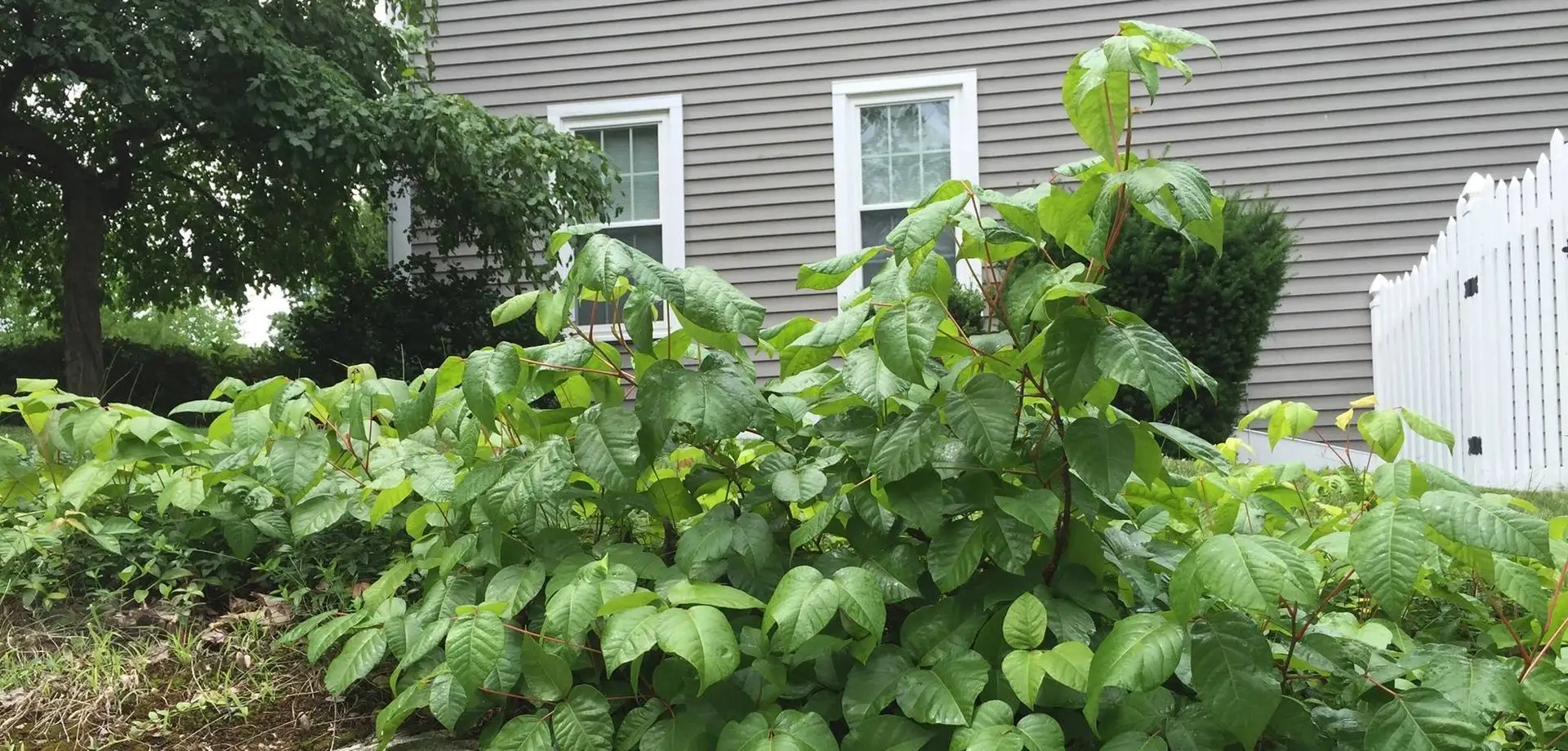
Poison Ivy In Your Yard
Our poison ivy eradication guarantee extends from the year it is treated through the next calendar year!
How Poison Ivy Spreads on Your Property
Poison ivy spreads two ways, and both are why one small patch turns into a yard-wide problem.
Underground. The roots run sideways under the soil and send up new plants as they go. What looks like a dozen separate plants along a wall is often one root system. Pull the top and the root keeps going.
By seed. Mature vines that climb trees flower and set clusters of whitish berries. Birds eat the berries and drop the seeds wherever they perch, which is why poison ivy turns up along fences, under trees and beside bird feeders. One vine in a tree can keep seeding your whole yard.
On most properties we walk, it is in the same places:
- Stone walls, where it roots in the gaps and runs along the whole length of the wall.
- Fence lines, under the bottom rail where the mower and string trimmer do not reach.
- The edge of the woods and timberlines, where the lawn meets the trees.
- Garden beds and foundation plantings, woven in with shrubs and perennials.
- Tree trunks, as thick, hairy vines that can climb well up into the canopy.
Not sure what you are looking at? Our poison ivy photo gallery shows it as ground cover, shrubs and climbing vines, in every season.
REQUEST INFORMATIONTips for an Infested Yard
Until the poison ivy is gone, the goal is simple: stop it from getting on you, your kids and your pets.
- Know where it is. Walk the yard and mark every patch, so the whole family knows which areas to stay out of.
- Keep kids and pets out of the patches. Pets carry the oil on their fur straight into the house.
- Do not mow or string-trim through it. Trimmers shred the plant and throw oily bits onto your legs, arms and face.
- Cover up for any yard work near it: long sleeves, long pants, boots and disposable gloves. Wash everything right after.
- Never compost it or leave pulled plants in a pile. Bag them. Dead stems and roots still carry urushiol.
- Never burn it. The smoke can cause a serious reaction in your lungs.
A few scattered plants are a job you can handle yourself, and our poison ivy tips cover how. Large patches, vines in trees, poison ivy around play areas, or anyone in the house who reacts badly are when to bring in a professional. Pulling and spraying usually leaves broken roots behind, and the plants come back.
We start with an educational site visit. We walk every edge of the property with you and mark each patch on a map. Then two treatments kill the plant roots and all, and the eradication guarantee runs through the next calendar year.
Can You Have Poison Oak and Poison Sumac?
Poison oak: almost certainly not. Poison oak grows in the Southeast and on the West Coast, and there is little to none in Massachusetts. If someone in New England says they have poison oak, it is almost always poison ivy growing as a shrub. Poison ivy leaflets can have lobed or wavy edges that look a lot like oak leaves.
Poison sumac: possible, but only in wet ground. Poison sumac does grow here, but it sticks to swamps, bogs and wet, poorly drained areas. It is unlikely in a typical yard unless your property backs onto wetland. Look for:
- A shrub or small tree, not a vine.
- Leaves with 7 to 13 leaflets with smooth edges, on red stems.
- Loose, drooping clusters of whitish or gray-green berries.
Do not confuse it with staghorn sumac, the common roadside sumac. Staghorn sumac grows on dry ground and has toothed leaflets and upright, fuzzy, red berry clusters. It is harmless.
Poison sumac carries the same urushiol as poison ivy, and the reaction is often worse. If you think you have it, we can identify it on the site visit. We also handle other invasives and undesirables like black swallowwort.